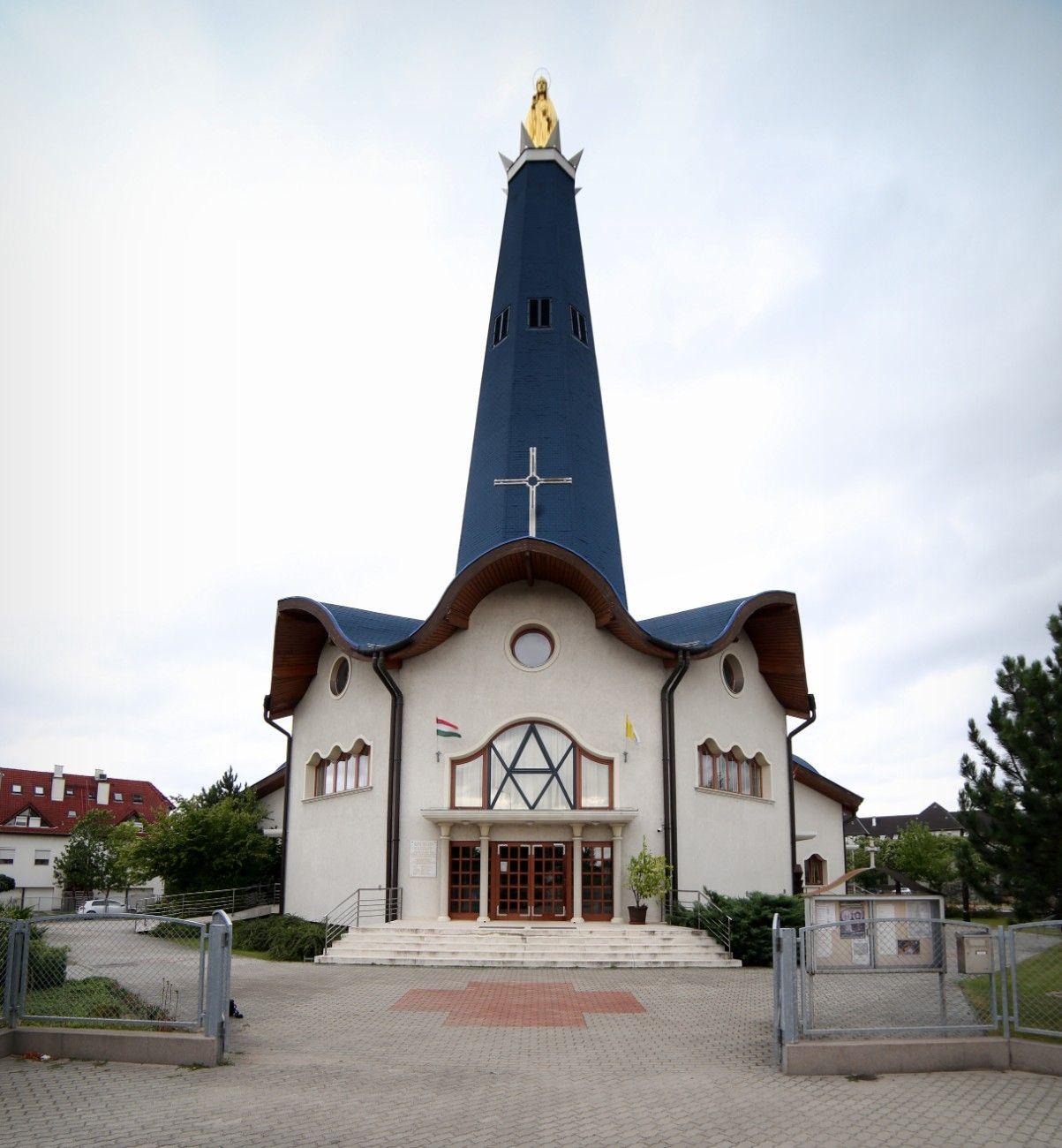
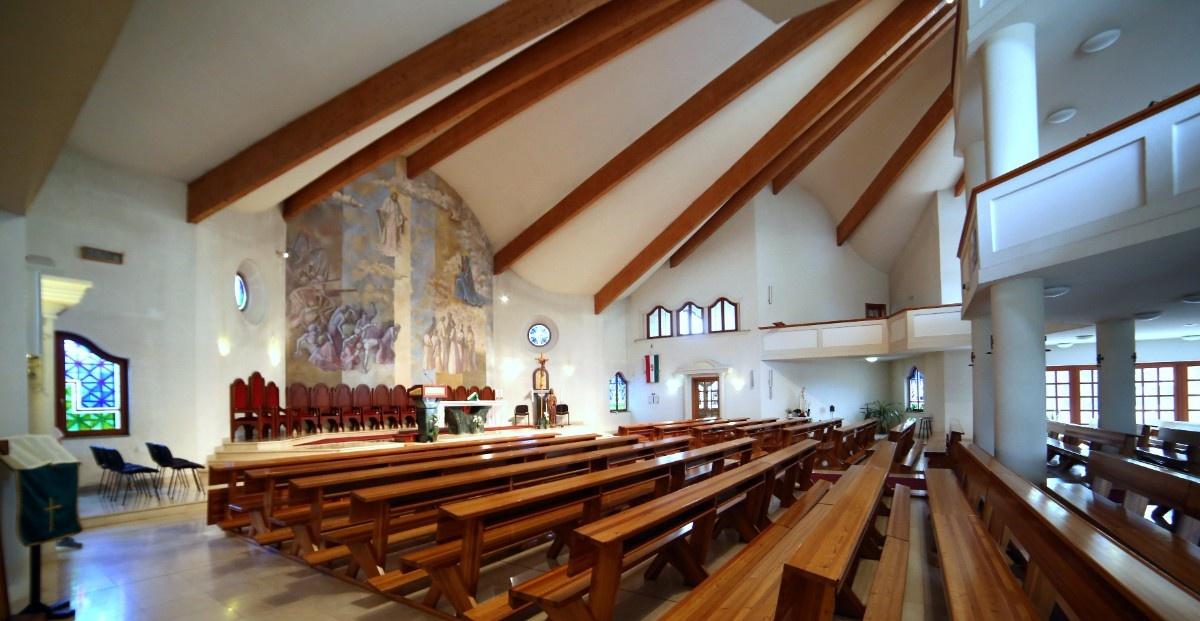
The Church of Our Lady of Fatima is the central spiritual and community hub of Soroksár-Újtelep in Budapest, built parallel with the rapid development of the neighbourhood around the turn of the millennium. The history of one of the oldest Fatima pilgrimage sites in the southern suburbs of Pest began with a vow made by József Novák, who later became the pastor of Újtelep. Upon returning home from Russian captivity, he set out to spread devotion to Our Lady of Fatima. He also requested cedarwood statues from Fatima, which offered a special source of hope to the faithful following the suppression of the 1956 Revolution. However, the message of Fatima was not viewed favourably by the communist authorities, as she called for prayer for the conversion of Russia and also spoke of the persecution of the Church. Around the increasingly popular pilgrimage site, József Novák built a chapel in 1958, followed by a church; however, the authorities soon had the building closed, and it was later converted into a residential house.
The construction of the current church began in October 2000 based on the plans by Gábor Marosi. In 2002, Cardinal László Paskai consecrated the church. In 2003, a 6.5-meter-tall gilded statue of the Virgin Mary, created by János Meszlényi, a Munkácsy Mihály Prize-winning sculptor, was placed atop the 41-meter-tall tower, and in 2004, the Stations of the Cross with wooden crosses was completed.
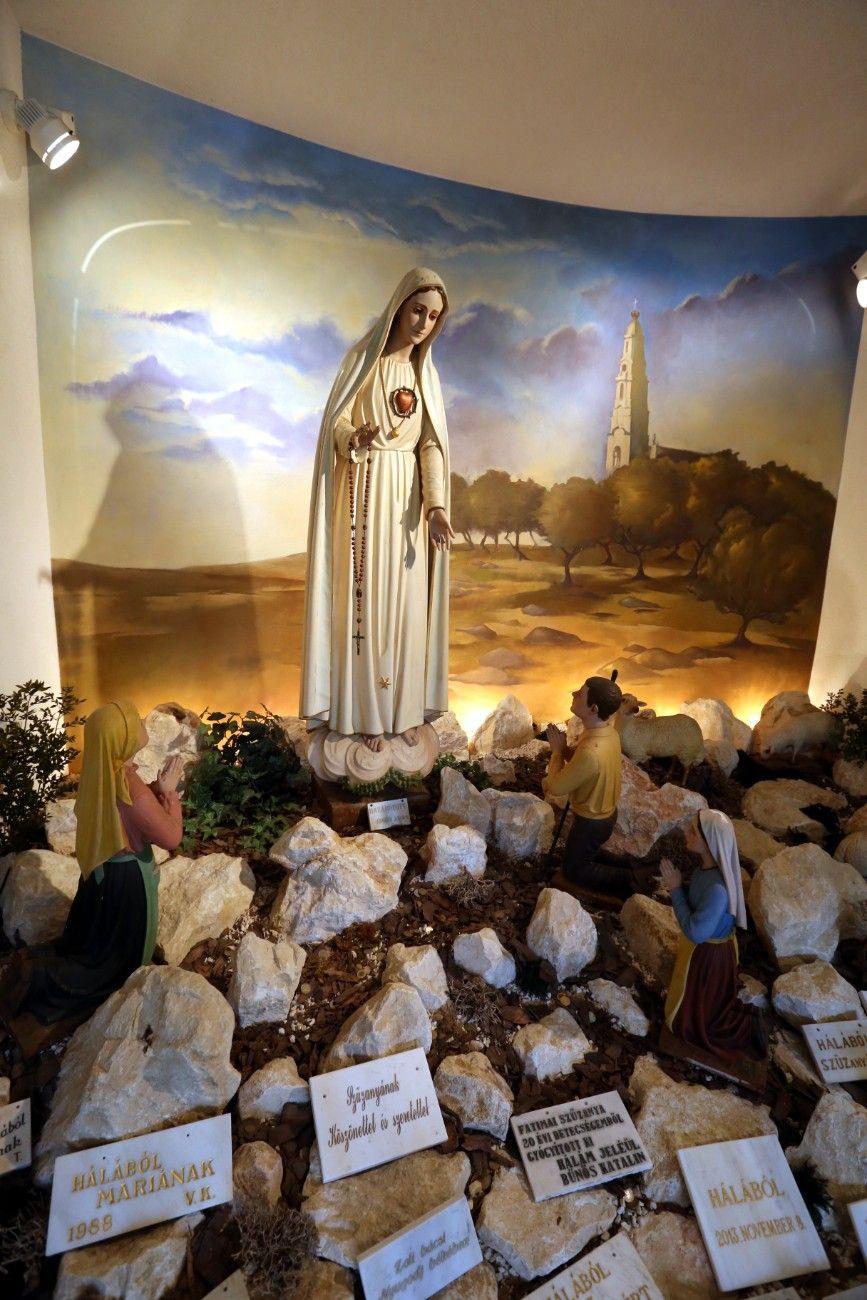
The oldest and best-known feature of the church is the group of cedarwood sculptures installed in 1957 next to the main entrance, which served as an important place of pilgrimage even during difficult political times, as evidenced by the numerous plaques of gratitude placed around it.
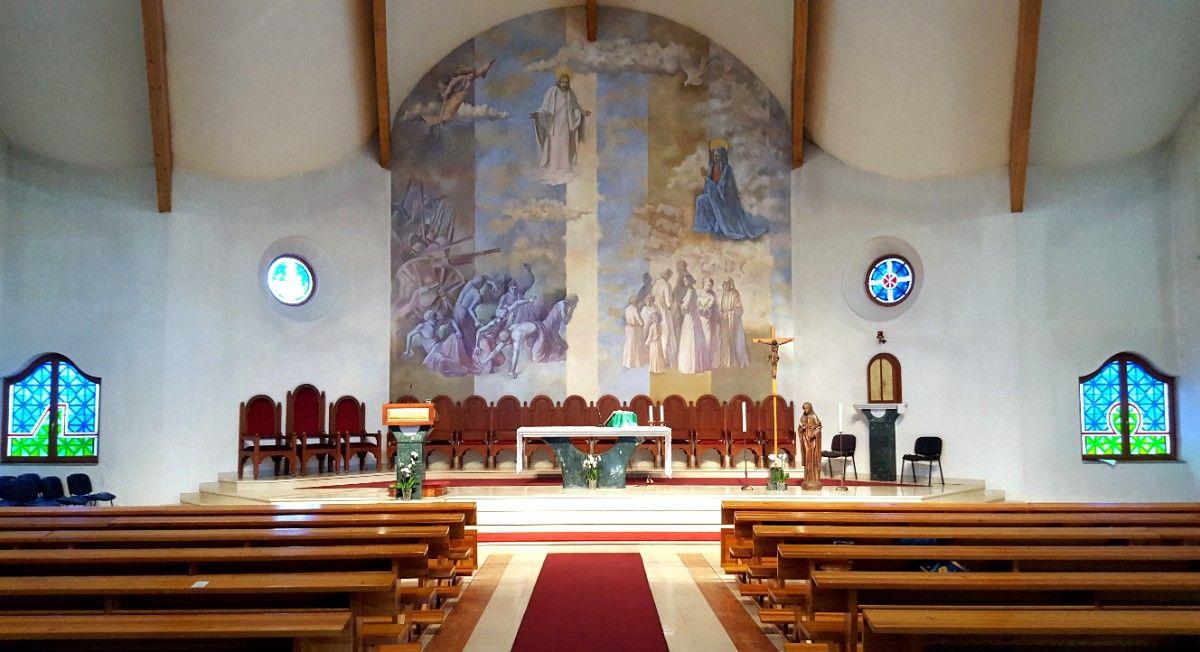
The wall behind the sanctuary is adorned with a 65-square-meter fresco, dominated at its centre by the figure of the Risen Jesus; the faithful go to Him, He welcomes them into His church, and Mary wishes to lead all people to Him. On either side are stained-glass windows symbolizing the Eucharist and baptism.
The church’s tower rises high from the undulating roof structure, presenting Mary to the world as the woman of the future, the redeemed woman who says yes to God’s word, and thus the tower is the instrument of the birth of a new world. The statue standing on the top of the crowned tower emphasizes Mary’s significance: it depicts the Queen of the World, to whom Saint Stephen offered the country, thus making her the protector and intercessor of the Hungarian people. The blue roof covering envelops the church like the Virgin Mary’s mantle. The undulating roof, reminiscent of a stormy sea, symbolizes the history of the past thousand years and the rapidly changing world, while the tower rising confidently toward the sky from it indicates the direction and expresses a point of certainty.
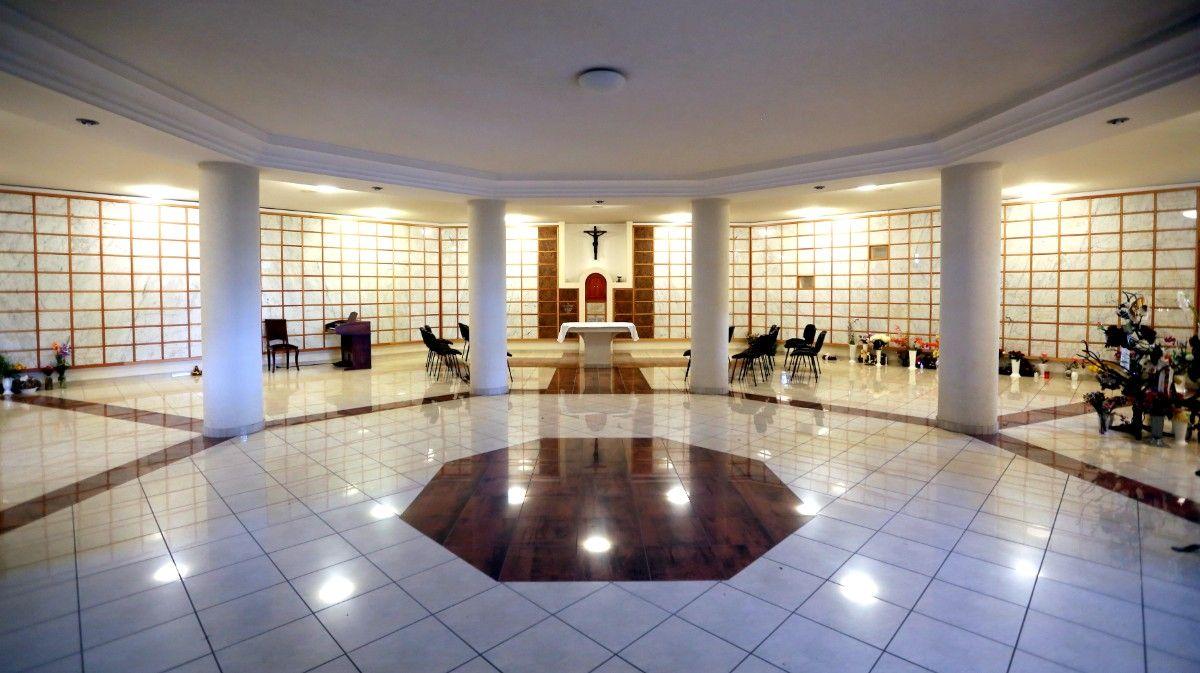
The centre of the crypt, which has a regular octagonal floor plan, coincides with the centre of the tower. The 41-meter-tall tower stands on the eight columns of the crypt, which symbolically connect Heaven and Earth, giving the church a unique atmosphere. The passageway leading to the crypt is illuminated by light filtering through fiberglass, evoking a special, starry sky on the walls.
Did you know?
The Way of the Cross with kopjafas (traditional Hungarian carved memorial poles) surrounding the church is the work of seven woodcarvers. Arranged around the Queen of the Hungarians the poles showcase the rich variety of wooden kopjafa motifs found in the Carpathian Basin.